

As more businesses rely on cloud computing to run applications, store data, and support daily operations, managing cloud expenses has become a top priority. Without the right strategy, cloud costs can quickly increase and reduce the value of your IT investment. That is why cloud cost control is essential for companies that want to reduce waste without impacting performance.
The good news is that lowering cloud costs does not mean sacrificing speed, reliability, or scalability. With the right approach, businesses can optimize spending while maintaining high-performing cloud environments.
What Is Cloud Cost Control?
Cloud cost control is the process of monitoring, managing, and optimizing cloud spending to ensure resources are used efficiently. The goal is not only to reduce costs, but also to maximize the value of every cloud resource.
A strong cloud cost control strategy typically includes:
- Resource usage monitoring
- Rightsizing compute instances
- Storage optimization
- Auto scaling workloads
- Budget forecasting
- Cost visibility across teams
- Performance optimization
With effective cloud cost management, companies can improve operational efficiency and maximize ROI.
Why Do Cloud Costs Increase?
Many organizations experience rising cloud bills due to unmanaged resources and lack of visibility. Common causes include:
1. Overprovisioned Resources
Using more CPU, RAM, storage, or bandwidth than required leads to unnecessary monthly costs.
2. Idle Resources
Unused virtual machines, databases, containers, or storage volumes may continue generating charges.
3. Lack of Monitoring
Without real-time dashboards, businesses may not know which workloads consume the highest costs.
4. Poor Storage Management
Old backups, duplicate data, snapshots, and unmanaged archives often create hidden expenses.
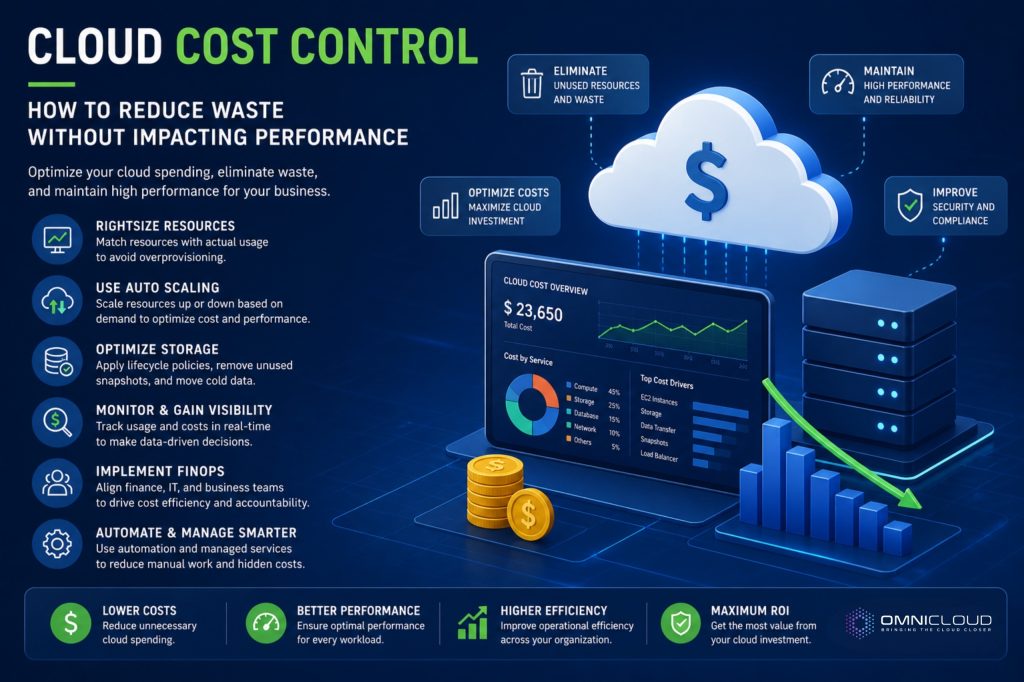
How to Reduce Waste Without Impacting Performance
1. Rightsize Cloud Resources
Rightsizing means adjusting cloud resources based on actual workload requirements.
Benefits include:
- Lower compute costs
- Better resource efficiency
- Reduced overcapacity
- Stable application performance
Review CPU, memory, and network usage regularly to choose the right instance sizes.
2. Use Auto Scaling
Auto scaling automatically increases resources during high traffic and reduces them during low demand.
Advantages:
- Consistent performance during peak loads
- Lower costs during off-peak hours
- Improved workload flexibility
This is especially effective for websites, e-commerce platforms, and seasonal applications.
3. Optimize Cloud Storage
Storage costs can grow rapidly if left unmanaged.
Best practices include:
- Move inactive data to cold storage
- Delete duplicate or outdated files
- Set lifecycle management policies
- Review backup retention schedules
- Remove unused snapshots
4. Improve Monitoring and Cost Visibility
Use cloud monitoring tools to track performance and spending in real time.
Important features:
- Billing alerts
- Usage reports
- Resource tagging
- Budget forecasting
- Department chargeback or showback
This helps teams make faster and smarter financial decisions.
5. Implement a FinOps Strategy
FinOps (Cloud Financial Operations) helps IT, finance, and operations teams work together to optimize cloud spending.
With FinOps, businesses can:
- Improve budget control
- Increase spending accountability
- Forecast costs more accurately
- Maximize cloud efficiency
6. Use Managed Cloud Services
Many businesses overspend because they lack in-house expertise to manage cloud environments effectively. Managed cloud services can help reduce waste while improving performance.
Benefits include:
- 24/7 monitoring
- Performance tuning
- Cost optimization
- Security management
- Expert technical support
Why Cloud Cost Control Matters
Without cost control, cloud spending can become unpredictable and inefficient. With the right optimization strategy, businesses gain:
- Lower IT operating costs
- Strong application performance
- Better cloud ROI
- Improved scalability
- Greater business competitiveness
Why Choose OMNI Cloud?
OMNI Cloud helps businesses manage cloud infrastructure with secure, scalable, and cost-efficient solutions.
Why OMNI Cloud:
- Enterprise-grade infrastructure
- Professional managed cloud services
- 24/7 monitoring and support
- Cost and performance optimization
- High-level security protection
- Flexible solutions for business growth
Cloud Cost Control: How to Reduce Waste Without Impacting Performance is essential for modern businesses that want to maximize cloud value. By applying rightsizing, auto scaling, storage optimization, FinOps, and real-time monitoring, companies can reduce unnecessary costs while maintaining performance.
If you want to optimize cloud spending and improve operational efficiency, OMNI Cloud is ready to support your digital transformation journey. Visit our website to explore more about our products https://omnicloud.co.id/.